Thomas Sowell and the Discipline of Clarity
For over fifty years, Thomas Sowell has asked uncomfortable questions, refused easy answers, and built one of the most influential bodies of work in modern economic thought. Whether you agree with him or not, ignoring him is no longer an option.
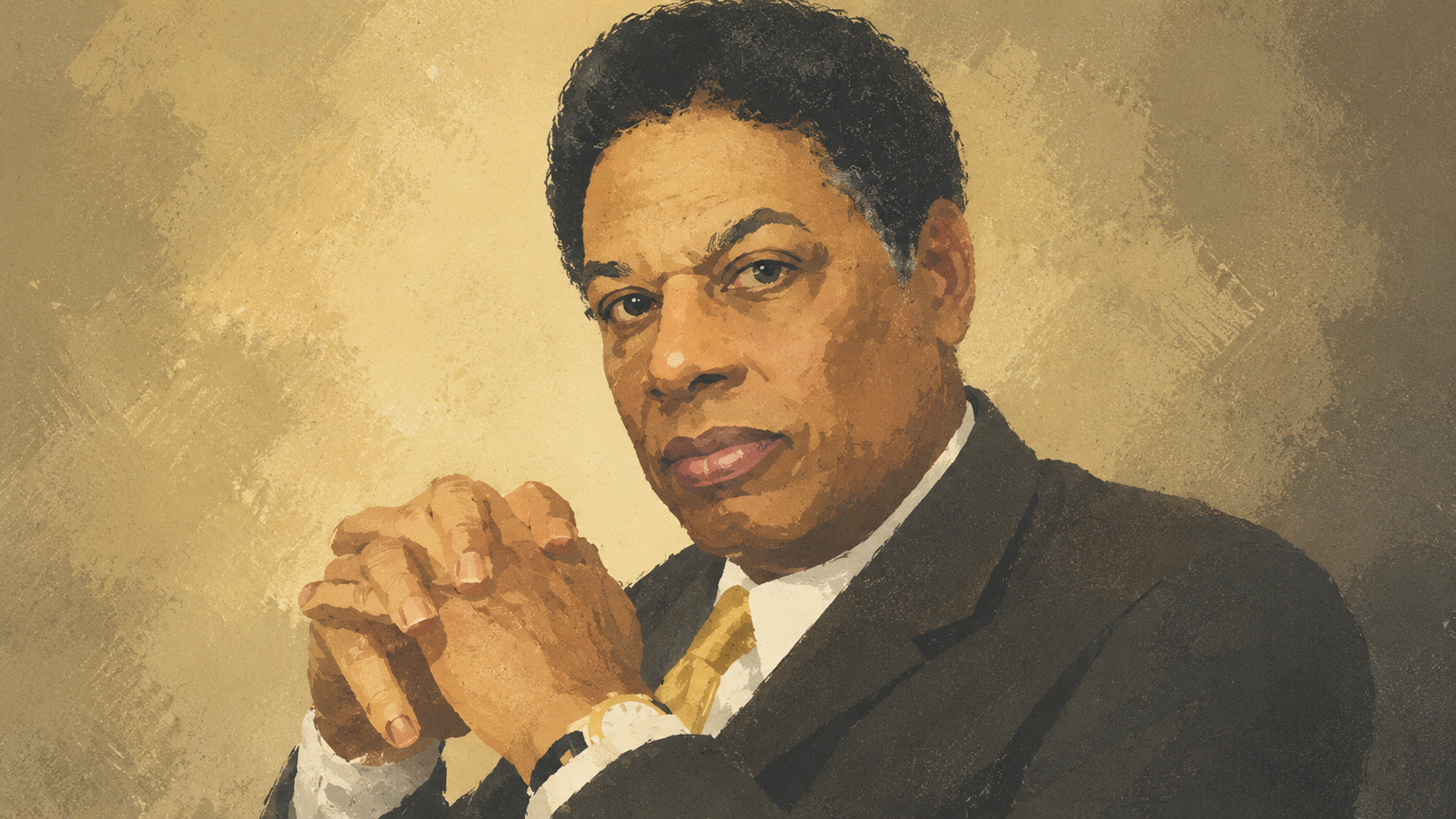
Few contemporary public intellectuals have shaped discussions surrounding economics, education, culture, and political thought as consistently — or as uncomfortably — as Thomas Sowell.
Across more than fifty years of writing, Sowell developed a reputation for approaching complex social questions with unusual directness. His work consistently challenged ideological assumptions from multiple directions, emphasized trade-offs over utopian thinking, and argued relentlessly for the importance of historical context, measurable outcomes, and institutional consequences over moral performance and political convenience.
What distinguished Sowell was not simply his conclusions — many of which remain genuinely contested. It was his method.
Rather than framing social issues through moral abstraction alone, he approached them through systems, incentives, unintended consequences, and observable outcomes. Whether discussing education, economics, race, or public policy, his work returned to a central and uncomfortable principle: good intentions do not exempt ideas from scrutiny. Outcomes matter. Evidence matters. The gap between what a policy promises and what it produces is not a footnote — it is the only measure that matters in the long run.
That insistence — applied consistently across five decades of public discourse — is the source of both his influence and his controversy.
A Method Before a Conclusion
The most important thing to understand about Sowell's work is that his analytical method precedes and shapes his conclusions — not the reverse.
Sowell was trained as an economist at Harvard, Columbia, and the University of Chicago, where he studied under Milton Friedman. His economic training produced a specific intellectual disposition: a deep suspicion of reasoning that ignores incentives, a commitment to examining trade-offs rather than assuming solutions, and a persistent attention to the difference between stated intentions and actual results.
This disposition produced a body of work that is genuinely difficult to categorize in conventional ideological terms. Sowell has criticized corporate concentration, questioned the integrity of elite institutions, challenged the assumptions of both political parties, and consistently argued that power — wherever it is concentrated — tends to serve itself before it serves those it claims to help.
His work is not always right. His conclusions on race and inequality in particular have drawn serious and substantive criticism from economists, sociologists, and historians who argue that his frameworks underweight structural factors and overweight cultural ones. Those are real disagreements that deserve serious engagement rather than dismissal.
But the method — empirical, skeptical, attentive to incentives and consequences, resistant to ideological capture — is one that any serious thinker, regardless of political orientation, can learn from. And for Black readers specifically, the willingness to apply rigorous scrutiny to institutions that claim to serve Black interests while producing questionable results is not a conservative impulse. It is an act of intellectual self-determination.
The Ideas That Shaped a Generation
Sowell's most enduring contributions to public discourse are not soundbites. They are frameworks — ways of approaching questions that change how the questions themselves are understood.
On Trade-offs:
"There are no solutions. There are only trade-offs."
This is perhaps Sowell's most recognized and most misunderstood observation. It is not an argument for passivity or against reform. It is an argument against the rhetorical habit of presenting policies as solutions rather than choices — as if resources were unlimited, consequences were predictable, and no one would pay a cost for any given benefit.
Every policy decision involves allocating scarce resources among competing needs. The question is never simply whether a policy produces good outcomes in one dimension, but what it costs across all dimensions — including the dimensions that are not prominently featured in its advocacy.
This framework is as applicable to conservative policies as to progressive ones. It is not an ideological position. It is a demand for honesty about the full accounting of consequences.
On Power and Decision-Making:
"The most basic question is not what is best, but who shall decide what is best."
Sowell's suspicion of concentrated decision-making authority runs throughout his work. Whether discussing government bureaucracies, academic institutions, or corporate structures, he consistently returned to the question of accountability — who bears the consequences of decisions, and whether those who make decisions are the same people who live with their results.
For Black communities that have experienced the long history of having decisions made about their lives, their neighborhoods, their schools, and their futures by institutions with little accountability to them, this framework carries a particular resonance that transcends Sowell's own political conclusions.
On Truth and Political Convenience:
"When you want to help people, you tell them the truth. When you want to help yourself, you tell them what they want to hear."
This observation reflects Sowell's broader skepticism toward political rhetoric shaped by emotional appeal and ideological convenience rather than honest assessment. It is an uncomfortable observation because it applies universally — to politicians, to activists, to media institutions, and to intellectuals across the entire political spectrum.
The willingness to tell people difficult truths rather than comfortable ones is, in Sowell's framework, the most fundamental test of whether an institution or individual is actually serving the people it claims to serve.
On Policy and Evidence:
"Much of the social history of the Western world over the past three decades has involved replacing what worked with what sounded good."
This is perhaps Sowell's most provocative argument — and the one most frequently taken out of context. His claim is not that traditional arrangements are always preferable, but that policymaking disconnected from evidence, historical memory, and measurable outcomes tends to prioritize moral signaling over actual effectiveness.
The critique is applicable across the political spectrum. It asks a simple and demanding question: beyond the stated goals of a policy, what did it actually produce? And is that question being asked seriously — or is the appearance of good intentions sufficient to insulate the policy from evaluation?
On Economics and Political Reality:
"The first lesson of economics is scarcity: there is never enough of anything to satisfy all those who want it. The first lesson of politics is to disregard the first lesson of economics."
This observation condenses one of Sowell's most consistent arguments: political narratives frequently ignore economic realities in favor of short-term persuasion. The assumption that desired outcomes can be achieved simply by declaring them priorities — without attention to resource constraints, incentive structures, or unintended consequences — produces policies that feel satisfying to advocate for and disappoint in practice.
On Education:
"Education is not merely neglected in many of our schools today, but is replaced to a great extent by ideological indoctrination."
Education remained one of Sowell's most sustained concerns across his career. His work on education focused on declining academic standards, institutional incentive structures, and the tension between education as genuine intellectual development and education as ideological conditioning.
For Black communities with a documented history of being denied educational access — and then being provided educational institutions that frequently failed to deliver genuine academic preparation — the question of what education is actually doing is not an abstract one. It is a direct economic and generational question.
The Controversy That Cannot Be Separated From the Work
Any honest engagement with Sowell's work requires acknowledging the critiques that have followed it.
His frameworks on race and inequality have drawn serious criticism from economists and sociologists who argue that his emphasis on cultural explanations for racial disparities systematically underweights the documented structural factors — redlining, employment discrimination, unequal school funding, criminal justice disparities — that have shaped Black economic outcomes. Critics have argued that Sowell's work, regardless of intent, provides intellectual cover for dismissing structural remedies before their potential has been seriously evaluated.
These are substantive arguments backed by substantial empirical research. The racial wealth gap, the documented effects of redlining on current property values, the persistent disparities in educational resource allocation — these are not adequately explained by the cultural frameworks Sowell emphasizes, and serious engagement with his work requires acknowledging where his frameworks fall short as well as where they illuminate.
At the same time, the dismissal of Sowell's work as simply conservative apologetics misses something important. His critiques of elite institutions, his skepticism toward concentrated power, his insistence on accountability and measurable outcomes, and his argument that communities are best served by truth rather than comfortable ideology — these are positions that deserve engagement on their merits rather than dismissal based on where they fit in a political taxonomy.
Black Digest's commitment to centrist, evidence-based analysis means engaging with Sowell's work the way it deserves: seriously, critically, and without the requirement that every idea conform to a predetermined political conclusion.
What the Body of Work Ultimately Argues
Across all of the controversy and all of the debate, the core argument running through Sowell's work is something that most serious thinkers across the political spectrum can acknowledge: the world is complex, consequences are real, and the gap between what we intend and what we produce deserves honest examination.
That is not a conservative argument. It is an argument for intellectual rigor in a public discourse that increasingly rewards ideological performance over honest analysis.
Whether applied to economic policy, educational reform, criminal justice, or community development, the demand for honest accounting of consequences — for asking not just what we intended but what we actually produced — is one of the most important intellectual habits a community can cultivate.
Sowell built a fifty-year career on that demand. The work is flawed in places, contested in others, and genuinely illuminating in still others.
Engaging with it seriously — on its merits, with clear eyes about both its strengths and its limitations — is precisely the kind of intellectual exercise Black Digest exists to support.
Essential Works
Basic Economics — An accessible introduction to economic principles, incentives, markets, and resource allocation. The clearest entry point into Sowell's analytical framework and one of the most widely read economics texts of the past generation.
Discrimination and Disparities — An examination of inequality, statistical interpretation, and socioeconomic outcomes. The most directly relevant of Sowell's works to current debates about race, opportunity, and policy. Read alongside its critics for the most complete picture.
Black Rednecks and White Liberals — A collection of essays exploring culture, history, and identity. Sowell's most culturally focused work and his most provocative. Requires careful reading and engagement with the substantive critiques it has received.
The Vision of the Anointed — A critique of elite policymaking and ideological consensus within public institutions. Sowell's most direct examination of how intellectual establishments protect ideas from accountability.
A Conflict of Visions — A philosophical examination of the competing worldviews underlying modern political conflict. Perhaps his most durable contribution to understanding why political disagreement so often feels irresolvable — because the underlying visions of human nature are genuinely different, not simply the conclusions.
- Filed under
- Culture
- Reading time
- 10 min
- Author
- Editorial Desk