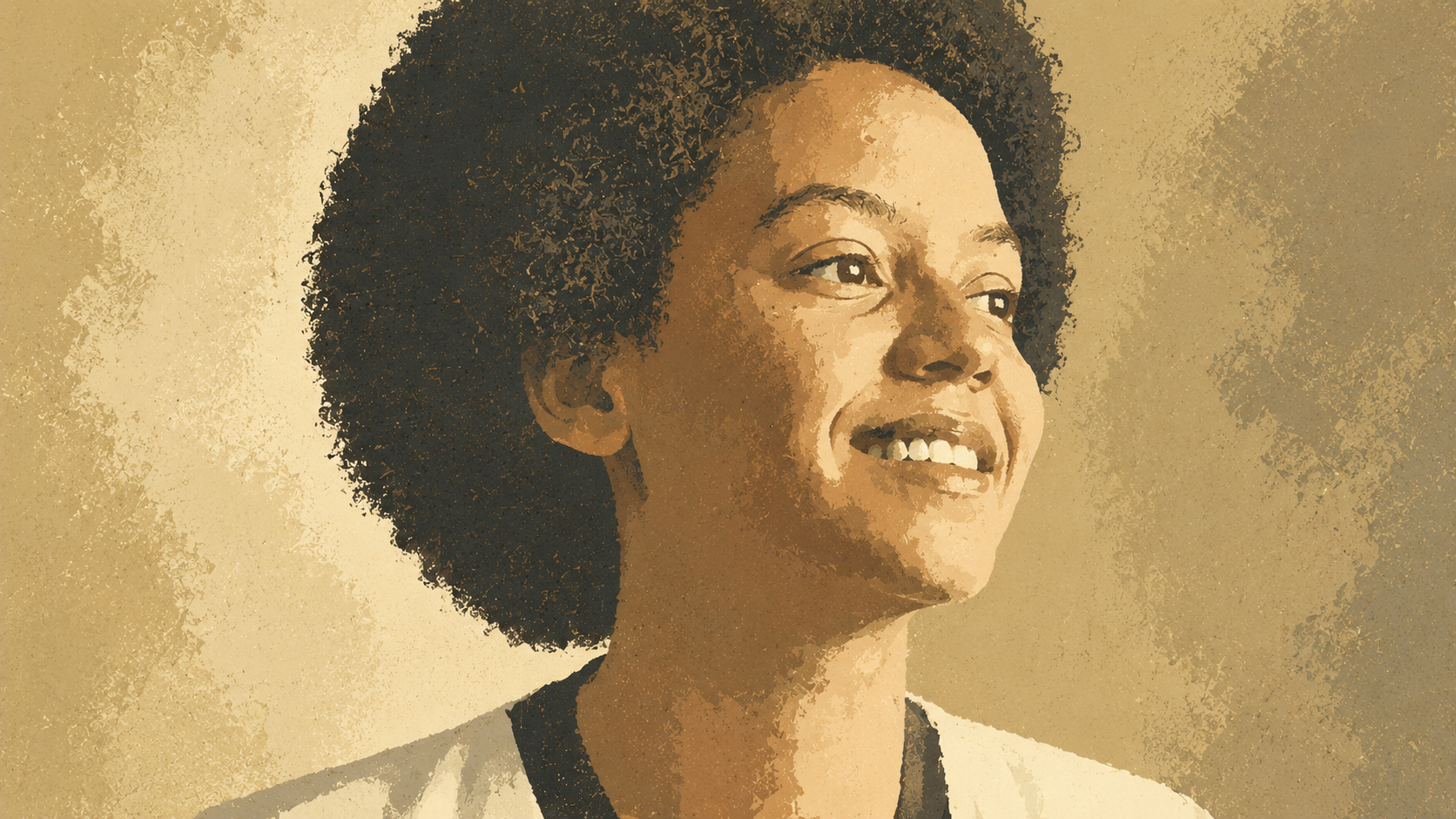
Few American writers shaped modern Black literary expression with the clarity, emotional precision, and cultural reach of Nikki Giovanni.
Across poetry, essays, lectures, and decades of public conversation, Giovanni developed a body of work that moved fluidly between the political and the personal — never fully settling into either, always insisting that the two could not be cleanly separated. Her writing explored identity, love, memory, grief, resistance, humor, and Black interior life with a voice that remained unmistakably her own: direct, lyrical, uncompromising, and deeply human.
That combination is rarer than it sounds. And it is precisely what made her influence endure long after the movements that first brought her to prominence had evolved into something else.
A Voice Forged in a Specific Moment
Born Yolande Cornelia Giovanni Jr. in Knoxville, Tennessee, Giovanni emerged as a prominent literary voice during the rise of the Black Arts Movement in the 1960s — a period defined by urgent questions about identity, resistance, and the relationship between art and political life.
Her early collections, most notably Black Feeling Black Talk, captured the emotional and political atmosphere of the era while establishing something that many writers of the moment could not sustain: a reputation for combining urgency with accessibility. The work was politically serious without being rhetorically impenetrable. It reached people — not just scholars and activists, but ordinary readers who recognized something of their own experience in the language.
That accessibility was not a compromise. It was a craft decision. And it revealed a discipline that would define her career.
Beyond the Movement
What separates enduring writers from those defined by a single era is the ability to continue developing after the moment that first made them visible has passed.
Giovanni's work never remained confined to a single movement or ideological framework. Over the course of her career, her writing expanded well beyond protest — evolving into meditations on family, intimacy, imagination, education, Black cultural memory, and the texture of everyday life. She possessed a rare ability to write with intellectual depth while remaining accessible across generations and audiences.
That balance became central to her influence.
Cotton Candy on a Rainy Day explored emotional vulnerability and introspection in ways that felt almost counter to the public expectations of a poet who had made her name in politically charged spaces. Gemini turned the autobiographical essay into a vehicle for examining creativity and identity with honesty that resisted self-mythology. These were not retreats from relevance. They were expansions of what her voice was capable of holding.
The Public Intellectual as Living Conversation
While many writers of comparable literary stature maintained deliberate distance from mass audiences, Giovanni consistently moved toward conversation.
Through interviews, lectures, spoken-word recordings, and decades of teaching, she helped make poetry feel culturally alive rather than institutionally distant. Her voice carried beyond literary spaces into classrooms, community gatherings, radio broadcasts, and popular culture itself. She was comfortable being legible — and she understood that legibility was not the enemy of depth.
This instinct also carried a strategic dimension. Black intellectual life has historically struggled with the tension between rigor and reach. Giovanni navigated that tension by refusing to accept it as a binary. She wrote serious work and she talked to regular people about it. She appeared in universities and on talk shows. She held both without apology.
That model — the serious writer who remains connected to the community rather than above it — is one of her most underappreciated contributions to Black literary culture.
The Educator's Dimension
Giovanni spent decades as a professor at Virginia Tech, mentoring students and shaping the way emerging writers understood the relationship between language, identity, and lived experience.
Her presence in academic spaces was not incidental to her literary work — it was an extension of its central argument. She believed that literature should remain connected to life rather than retreating from it into abstraction. Her classrooms, by most accounts, reflected that conviction. Students encountered not a curator of canonical texts but a working writer actively thinking through what language could do and why it mattered.
That commitment to education as practice rather than performance placed her within a long tradition of Black intellectual life in which teaching and creating were understood as inseparable acts.
Honesty as Literary Method
One of the most distinctive features of Giovanni's voice across every phase of her career was its honesty about vulnerability.
She wrote about illness, personal struggle, love, and uncertainty with the same directness she brought to cultural critique and political observation. Even at her most public, her work retained emotional intimacy. Readers encountered not simply a public intellectual performing conviction, but a fully realized human voice navigating joy, contradiction, resilience, and loss — often within the same poem.
That openness is a literary choice with significant consequences. It is what allowed her work to age without feeling dated. Poems anchored in specific political moments can lose resonance as those moments recede. Poems anchored in recognizable human experience do not.
Giovanni understood this. Her writing was always doing both things simultaneously — speaking to the moment and speaking to something that outlasted it.
The Enduring Inheritance
Her influence continues to extend across literature, education, spoken-word performance, and contemporary Black intellectual thought. Many modern poets, writers, educators, and artists still draw from the balance she maintained between cultural critique and personal reflection — often without being fully conscious of how directly her example shaped what they consider possible within the form.
More than a poet of a particular era, Giovanni became an enduring presence within the broader tradition of Black American letters.
Her work is a sustained argument that language is not only a tool for protest. It is also a vehicle for memory, tenderness, imagination, and self-definition — and that none of those functions is less serious or less necessary than the others.
That argument remains as relevant as it ever was.
Essential Works
Black Feeling Black Talk — An early collection shaped by the political and emotional atmosphere of the Civil Rights and Black Power movements. The work that established her voice as both urgent and accessible.
Gemini — A reflective autobiographical work examining identity, creativity, and Giovanni's early life as a writer. Unusual in its honesty and its resistance to self-mythologizing.
Cotton Candy on a Rainy Day — Poems centered on introspection, emotional vulnerability, and personal reflection. Often cited as among her most mature and enduring work.
The Selected Poems of Nikki Giovanni — A broad introduction to the evolution of her literary voice across decades. The clearest single-volume entry point into the full range of her work.
Racism 101 — Essays exploring race, education, culture, and public life through Giovanni's distinct perspective. A demonstration of how her prose voice carried the same precision and honesty as her poetry.
- Filed under
- Culture
- Reading time
- 8 min
- Author
- Editorial Desk