Modern culture often treats exhaustion as evidence of ambition.
Constant movement, overwork, hyper-visibility, and perpetual availability are frequently framed as signs of discipline or success. Rest, by contrast, is interpreted as unproductive, indulgent, or secondary to more pressing responsibilities.
But exhaustion has consequences — and the data on what those consequences look like inside Black communities specifically is both well-documented and rarely centered in mainstream wellness conversations.
This is not a piece about self-care in the popular sense of the term. It is a piece about biology, cultural inheritance, and the measurable cost of a survival ethic that was adaptive under one set of conditions and quietly destructive under another.
What the Research Actually Shows
The evidence on chronic stress and its physiological consequences is not ambiguous.
Prolonged exposure to stress activates the body's hypothalamic-pituitary-adrenal axis, triggering sustained cortisol release that — when chronic rather than episodic — disrupts sleep architecture, suppresses immune function, accelerates cardiovascular deterioration, and impairs cognitive processing over time. This is not a theoretical mechanism. It is measurable in blood, tissue, and organ function.
For Black Americans, the data is stark.
Cardiovascular disease remains the leading cause of death among Black Americans, occurring at disproportionately higher rates than among white Americans. Black adults develop hypertension earlier in life, experience it more severely, and face higher rates of hypertension-related organ damage — including heart attack, stroke, and kidney failure — than any other racial group in the United States. Approximately 54% of Black adults have been diagnosed with high blood pressure, compared to roughly 46% of white adults.
The sleep gap is among the most underreported health disparities in America. Research published in the journal Sleep found that Black Americans are nearly five times more likely to be short sleepers — defined as fewer than six hours per night — than white Americans. A separate analysis from the CARDIA study found that Black participants had significantly lower sleep efficiency and higher rates of sleep fragmentation even when controlling for income, education, and neighborhood factors.
Sleep is not a luxury. It is the primary biological mechanism through which the brain consolidates memory, clears metabolic waste, regulates emotional response, and restores cellular function. Sustained sleep deprivation does not simply produce fatigue. It accelerates cognitive decline, impairs immune response, elevates inflammatory markers, and is independently associated with increased cardiovascular and metabolic disease risk.
The Weathering Hypothesis and Biological Age
In the early 1990s, public health researcher Dr. Arline Geronimus introduced what became known as the weathering hypothesis — the proposition that the chronic stress of navigating racism, economic exclusion, and social marginalization causes accelerated biological aging in Black Americans.
Decades of subsequent research have supported and expanded this framework.
Studies measuring telomere length — a biological marker of cellular aging — have found that Black Americans show significantly shorter telomeres than white Americans of the same chronological age, consistent with faster biological aging at the cellular level. Telomere shortening is associated with earlier onset of age-related disease, reduced immune function, and shorter overall lifespan.
This is not a genetic predisposition. It is a documented biological response to cumulative, chronic stress exposure — what researchers call allostatic load: the physiological wear accumulated when the body's stress-response systems are chronically activated over time.
The weathering hypothesis reframes a question that medicine has often asked incorrectly. The question is not why Black Americans have worse health outcomes. The question is what sustained exposure to structural stress does to a human body over decades — and whether those consequences can be meaningfully interrupted.
Rest is one of the primary biological mechanisms through which allostatic load is reduced. Its absence allows it to accumulate.
John Henryism: When High-Effort Coping Becomes Its Own Risk
In the 1980s, epidemiologist Dr. Sherman James introduced the concept of John Henryism — named after the legendary Black folk hero who worked himself to death competing against a machine — to describe a pattern of high-effort psychological coping with chronic psychosocial stressors.
James's research found a significant association between John Henryism — measured as a tendency to engage in prolonged, determined effort to overcome obstacles — and hypertension in Black Americans, particularly those in lower socioeconomic positions. The individuals who worked hardest against structural limitations, the research suggested, were also absorbing the greatest physiological cost.
The pattern is counterintuitive from a purely motivational standpoint. Effort and determination are unambiguously valuable. But sustained high-effort coping without adequate recovery creates chronic physiological arousal that, over time, damages the cardiovascular system regardless of the individual's intentions or accomplishments.
The implication is not that Black Americans should work less. It is that effort without recovery is biologically unsustainable — and that the cultural glorification of relentless effort, without equal attention to rest and recovery, creates conditions in which ambition and physical deterioration advance simultaneously.
A Survival Ethic Inherited Across Generations
Within the African American experience, rest carries a deeper historical context than mainstream wellness culture typically acknowledges.
For generations, survival itself required extraordinary endurance. The labor conditions of slavery — in which rest was controlled, rationed, or denied entirely — created a foundational relationship between Black bodies and unceasing work that did not simply disappear with emancipation. It became embedded in cultural norms, in family structures, in the values transmitted across generations about what it meant to be responsible, to be strong, to be worthy.
The Great Migration brought millions of Black Americans into industrial labor economies that demanded physical endurance under conditions of economic precarity and racial discrimination. Jim Crow–era America required constant social vigilance — the psychological labor of navigating hostility, adjusting behavior, and managing visibility across every public interaction. That vigilance has a physiological cost that accumulates over time and across generations.
The result, for many Black families, was the inheritance not simply of a work ethic, but of a survival ethic — a deeply conditioned relationship to rest that frames it as something earned only after every obligation is met, every threat is managed, every expectation is exceeded.
The distinction between a work ethic and a survival ethic matters because they produce different relationships to recovery. A work ethic allows for rest as a legitimate part of the cycle of effort. A survival ethic cannot afford to. There is always another threat. Another obligation. Another standard to clear.
That inheritance is not a character trait. It is a rational adaptation to historical conditions — one that carries significant costs when those conditions change and the adaptation does not.
The Digital Era and the Fragmentation of Rest
The physiological case for rest is compounded by an increasingly hostile information environment.
The modern attention economy is architecturally designed to prevent the conditions under which rest and psychological recovery occur. Algorithmic feeds reward emotional activation. Notifications interrupt sustained focus. Perpetual discourse creates an environment in which disengagement feels irresponsible — as though stepping away from the stream means missing something critical.
For Black communities specifically, this dynamic carries additional weight. Many of the most emotionally activating events in the news cycle — police violence, political attacks on Black voting rights, racial health disparities, and incidents of discrimination — are not abstractions. They are direct threats to the lives and safety of people the reader knows, or to the reader themselves.
The physiological stress response does not distinguish between a threat encountered in person and a threat encountered through a screen. The nervous system absorbs both. And when exposure to threatening information is continuous — through social media, through news, through community conversation — the stress response has no clear off-switch.
Rest, in this environment, requires active protection. It does not occur by default. It requires deliberate decisions about when and how to disengage from information environments, how to structure recovery into daily and weekly rhythms, and how to create conditions within which the nervous system can actually downregulate.
What Rest Actually Requires
Rest is frequently misunderstood as the simple absence of activity. The research suggests otherwise.
Restorative rest involves several distinct categories, each with different physiological functions:
Sleep — The most critical and most compromised. Seven to nine hours of quality sleep per night is the evidence-based standard for adult cognitive and physical health. Consistent sleep deprivation below six hours is independently associated with increased risk of hypertension, diabetes, obesity, depression, and cardiovascular disease.
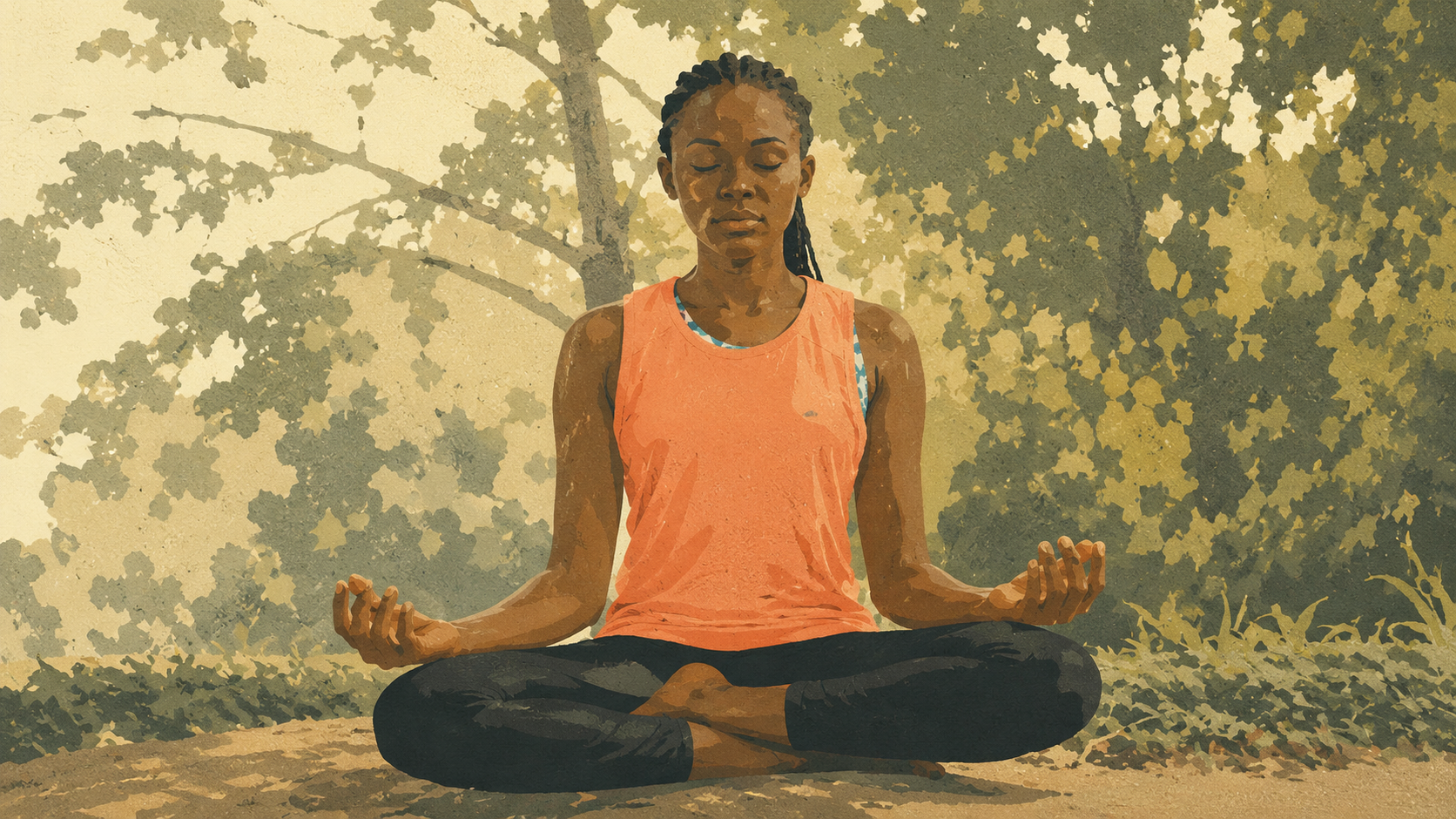
Psychological stillness — Periods of mental quietude in which the mind is not processing new information, solving problems, or managing social interaction. Meditation, nature exposure, and contemplative practice have all been associated with measurable reductions in cortisol and inflammatory markers.
Social rest — Recovery from the cognitive and emotional labor of sustained social performance, including code-switching, managing others' perceptions, and navigating environments where hypervigilance is required.
Creative and recreational engagement — Activity pursued for intrinsic value rather than productivity. Research consistently associates leisure activity with reduced stress, improved mood, and better long-term health outcomes.
None of these are indulgences. They are maintenance — for the mind and the body responsible for carrying every other obligation.
Sustainable Ambition as a Long-Term Strategy
The broader challenge is cultural as much as personal.
Communities that normalize burnout as a marker of success may eventually inherit its consequences collectively — in the form of elevated disease rates, reduced cognitive capacity, diminished creative output, and shortened lives. The data suggests this is not hypothetical.
But the question is not simply how to rest. It is how to reframe rest as a legitimate and necessary component of long-term achievement rather than a concession to weakness.
Sustainable ambition — ambition that compounds across decades rather than burning intensely and then collapsing — requires recovery as a structural element, not an occasional reward. The athletes, scholars, executives, and artists who sustain high performance over long careers are not those who never rest. They are those who treat recovery with the same intentionality they bring to effort.
That principle applies to communities as well as individuals.
A culture that preserves its health, its cognitive capacity, and its emotional resilience will outperform one that sacrifices all three in the name of short-term output. That is not a philosophical argument. It is a compounding effect — measurable over time, visible in the difference between communities that sustain themselves and those that exhaust themselves chasing a standard they were never meant to meet at that cost.
Rest is not the absence of discipline. It is the infrastructure that allows discipline to endure.
- Filed under
- Health
- Reading time
- 10 min
- Author
- Editorial Desk