Every community depends on systems that shape how information is interpreted, distributed, preserved, and remembered.
Media is one of those systems.
It influences public perception, establishes cultural visibility, determines which stories receive sustained attention, and — perhaps most consequentially — shapes how communities understand themselves over time. The question, therefore, is not simply whether representation exists within media. The more important question is who controls the platforms through which narratives are constructed in the first place.
That distinction carries weight that a generation of conversations about representation has sometimes missed.
The Infrastructure Gap
For much of American history, Black communities operated with limited ownership over large-scale media infrastructure. As a result, coverage of Black life was frequently incomplete, distorted, reactionary, or narrowly framed — reduced to conflict, crisis, or entertainment at the expense of the fuller, more complex picture.
Independent Black media emerged partly in response to this absence.
Publications, newspapers, radio stations, journals, and later digital platforms created space for perspectives that were routinely neglected within mainstream institutional frameworks. At their strongest, these platforms did something more than simply offer an alternative point of view. They documented local realities. They preserved cultural memory. They supported political organization. They expanded public awareness around issues that larger outlets frequently minimized or ignored entirely.
The legacy of that infrastructure — from the Chicago Defender and the Pittsburgh Courier to Essence and beyond — is not simply journalistic. It is historical. These publications created records of Black life that would not otherwise exist in the public archive.
Beyond Correction: The Imagination Problem
The role of Black media extends well beyond correcting the distortions of mainstream coverage.
Its greatest long-term value may lie in its ability to expand the range of stories associated with Black life itself — and by extension, the range of possibilities that Black communities believe are available to them.
This is not a soft argument. It is a structural one.
Communities are shaped not only by policy and economics, but by imagination. The examples people repeatedly encounter — in editorial content, in featured stories, in the figures who are profiled and celebrated — influence what they believe is possible, valuable, or worthy of pursuit. Media ecosystems carry educational consequences alongside cultural ones.
A media environment centered primarily on spectacle, outrage, or a narrow set of archetypes narrows public imagination over time. One that consistently highlights intellectual life, entrepreneurship, scientific achievement, institutional development, artistic innovation, and long-term strategic thinking expands it.
That distinction matters more than any single story.
The Digital Era and the Structural Incentive Problem
The challenge facing Black media today is not simply political bias. It is structural incentive.
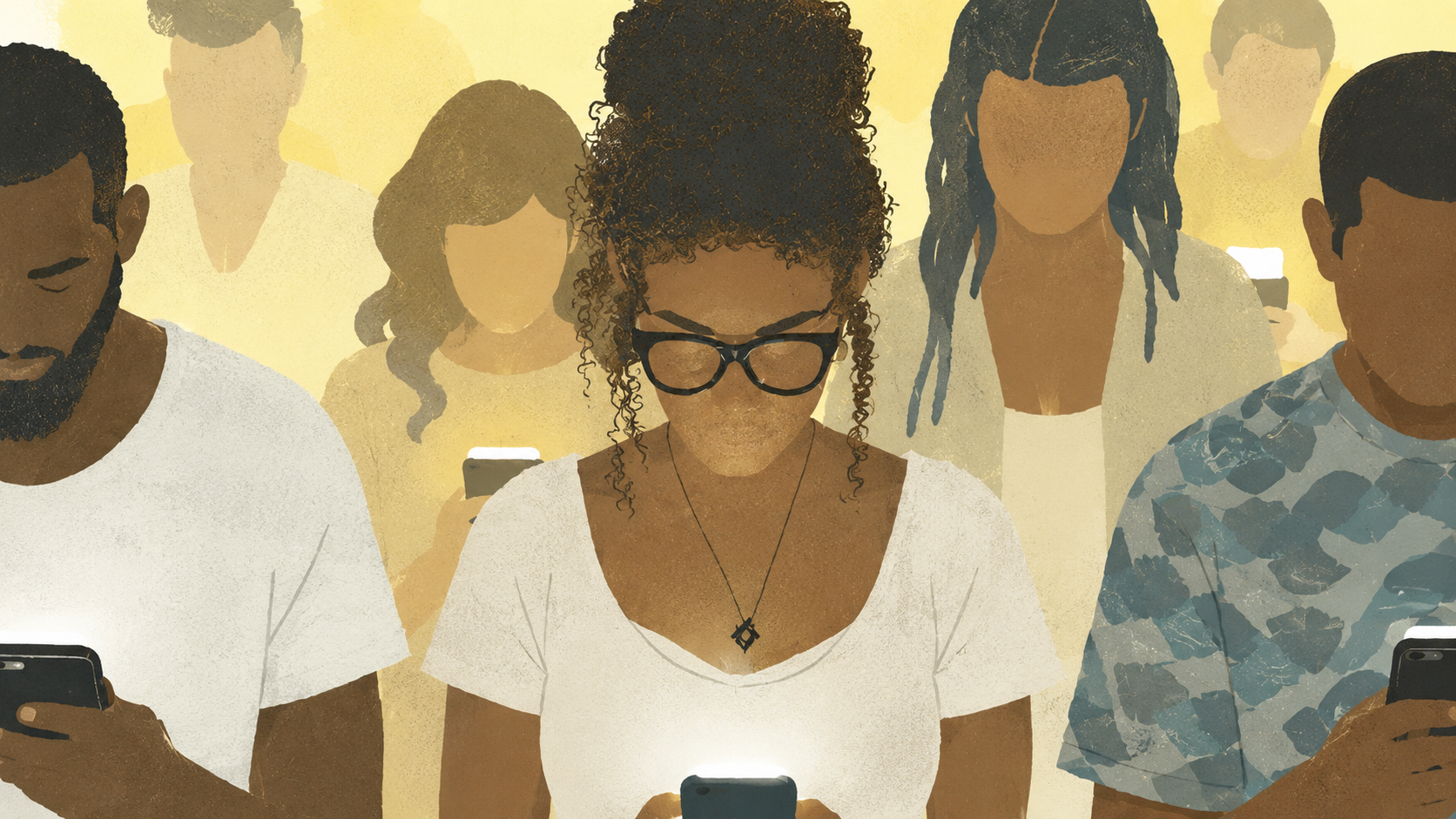
As algorithms increasingly govern visibility, many platforms now reward immediacy over depth, emotional reaction over reflection, and engagement metrics over institutional responsibility. Under these conditions, the media that survives and scales is often the media that provokes — regardless of whether provocation produces understanding.
This creates a problem that goes beyond any individual outlet's editorial choices. It is a problem embedded in the architecture of the information environment itself.
Independent media platforms capable of maintaining editorial integrity — publishing work that is analytically serious, historically grounded, and resistant to algorithmic pressure — become increasingly valuable precisely because they are increasingly rare. Their value is not just cultural. It is structural.
Communities that rely entirely on externally controlled platforms for their information may eventually find themselves reacting to narratives rather than shaping them. Algorithmic relevance is temporary. Institutional integrity compounds.
Ownership Is the Strategy
This is where the conversation about Black media converges with a broader conversation about Black wealth and long-term infrastructure.
Websites, archives, mailing lists, research platforms, and independent digital infrastructure provide something that platform-dependent visibility cannot: continuity. They exist outside the reach of algorithm changes, platform shutdowns, and shifting editorial priorities at institutions that have historically shown limited accountability to Black communities.
Ownership of media infrastructure is not simply a philosophical position. It is a practical one. A mailing list cannot be deplatformed. An owned archive does not disappear when a social network changes its terms of service. A publication with its own domain and subscriber base has leverage that a page within someone else's ecosystem never will.
That principle applies regardless of scale. The goal is not to immediately build a competing institution to legacy media. The goal is to build infrastructure that compounds over time — growing in trust, depth, and cultural authority while remaining accountable to the community it serves.
What Serious Black Media Looks Like
The strongest media institutions do more than report events. They cultivate informed communities — readers and audiences capable of critical thought, historical awareness, and long-term strategic imagination.
That means expanding the range of topics that receive sustained editorial attention.
Technology, economics, philosophy, scientific research, mental health, infrastructure, education, and ownership all deserve serious coverage alongside entertainment and politics. Not because entertainment and politics are unimportant — they are — but because a media ecosystem that treats them as the primary lens through which Black life is understood produces an incomplete picture.
Black intellectual life is broad. Black entrepreneurship is global. Black scientific and academic contributions are deep and largely underdocumented in accessible formats. Black philosophical and spiritual traditions carry frameworks for living that deserve serious engagement rather than occasional acknowledgment.
Media that engages with that full range — consistently, rigorously, and without condescension — is not simply good journalism. It is a form of cultural infrastructure.
The Long View
The future of Black media may depend less on competing with legacy outlets at scale and more on cultivating something those outlets have frequently failed to build within Black communities: trust, clarity, and intellectual independence.
That is a slower project than viral content. It requires editorial consistency over time, a willingness to prioritize depth over traffic, and a commitment to serving the audience rather than performing for it.
But media infrastructure built on those principles carries forward in ways that trend-driven platforms cannot. It becomes reference material. It builds reputation. It creates the archival foundation on which future understanding of this moment in Black history will be constructed.
The goal is not simply visibility. The goal is depth.
And depth, built intentionally and owned outright, is one of the most durable forms of cultural capital a community can develop.
- Filed under
- Community
- Reading time
- 8 min
- Author
- Editorial Desk